
Venture capital (VC) is a game of asymmetric outcomes. Global VC funding reached $425 billion in 2025, according to Crunchbase. Startup failure rates remain high. An often-cited Startup Genome report says more than 90% of startups fail. Rigorous due diligence is what separates value-creating investments from costly write-downs.
VC due diligence is the systematic, multi-stage evaluation of a startup’s financials, market position, product, legal standing, team, and operations before committing investment capital, with some diligence completed before the term sheet and confirmatory diligence completed before closing. In short, it is how investors test a founder’s story against evidence.
This guide provides a venture capital due diligence checklist for seed-through-Series B investors. It also serves founders preparing for investor due diligence, because knowing what VCs will scrutinize is the fastest way to get ready for it.
We cover the key checklist areas, the process stages, common red flags, and how a data room supports the workflow.
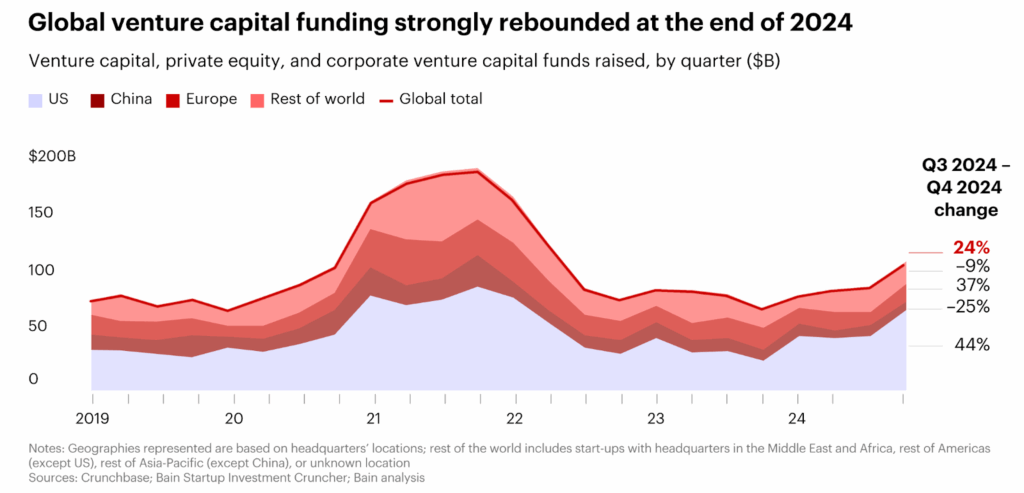
Source: Global Venture Capital Outlook: The Latest Trends
Key Takeaways
- VC due diligence is a tiered, forward-looking evaluation of a startup’s market, team, product, financials, legal standing, go-to-market, operations, and risk.
- It differs from PE or M&A diligence because early-stage companies offer limited historical data. Consequently, VCs weigh opportunity and founder quality as heavily as risk.
- A complete VC due diligence checklist covers eight areas, from TAM sizing and founder background checks to cap table due diligence and insurance.
- The process runs in four stages: initial screening, preliminary diligence, full diligence, and final close diligence.
- The most common red flags are unclear IP ownership, messy cap tables, inconsistent financials, and customer concentration.
- A virtual data room gives both sides granular permissions, audit trails, and structured Q&A across parallel deals.
What Is VC Due Diligence?
VC due diligence is the structured, multi-stage evaluation a venture capital firm performs on a startup before investing. It examines the company’s financials, market opportunity, product and technology, legal and corporate records, founding team, and operational capabilities.
The goal is to validate the investment thesis and surface material risks before the investor commits capital.
However, it differs from private equity or M&A due diligence in three ways.
- Targets have limited historical data, so seed and Series A companies rarely have audited financials or long operating track records.
- Growth ambiguity is high, and value depends on forward-looking assumptions rather than established cash flows.
- Value is founder-dependent, which makes team assessment and founder background check work far more central than in later-stage deals.
As a result, startup due diligence demands an opportunity-oriented lens alongside risk assessment. The question is not only ‘what could go wrong?’ but also ‘is the upside large enough to justify the risk?’
The process is also tiered. Deals move from initial screening to deeper diligence, then to a term sheet, and finally to close diligence. This way, each stage filters the funnel further, so effort concentrates on the opportunities most likely to convert.
Responsibility is shared across the deal team. Associates and principals run the analysis, partners lead reference calls and final judgment, and external counsel handles legal review. In addition, many firms bring in technical advisors for deep product or IP assessment.
A consistent checklist keeps standards uniform across everyone involved.
Why VC Due Diligence Matters
Given the high startup failure rate, investors should test market demand, cash runway, and business-model resilience early.
Meanwhile, HBR reports that a typical VC firm receives more than 1,000 proposals per year. Only a disciplined process separates the tiny fraction worth backing from the rest.
WeWork is a notable example. At its peak, the company was valued at $47 billion. However, its 2019 IPO filing exposed deep losses, an unsustainable business model, and serious governance problems. Investors who dug into unit economics and governance structures earlier could have surfaced each of these issues. The episode showed that brand momentum and founder charisma are not substitutes for evidence.
For founders, the same logic applies in reverse. A startup that survives a rigorous due diligence checklist for investors closes faster, negotiates from strength, and builds trust that carries into the board relationship.
Beyond that, consistency matters as much as depth. When every partner and associate applies the same framework, deal quality stops depending on who happens to run the review. Moreover, a reusable checklist makes decisions comparable across the portfolio and defensible to LPs.rises down the road. However, it comes with several difficulties, which we explore next.
Data rooms for VC due diligence

Overall rating:
4.9/5
Excellent

Overall rating:
4.8/5
Excellent

Overall rating:
4.7/5
Excellent
VC Due Diligence Checklist: Key Areas
A strong checklist covers eight areas. Each targets a distinct category of startup risk or opportunity. Together, they form a reusable due diligence checklist for startups at any stage from seed to Series B.
The checklist below is easy to read, and the depth of each area should vary by round size and company maturity:
| Area | What to check | Red flags |
| Market | TAM/SAM/SOM, growth rate, timing, competitors | Small market, weak differentiation, unclear timing |
| Team | Founder background, references, equity splits, leadership gaps | Founder disputes, poor references, key-person dependence |
| Product & IP | Product-market fit, IP ownership, scalability, open-source use | Unassigned IP, weak retention, technical debt |
| Financials | ARR/MRR, margins, burn rate, runway, CAC/LTV, cap table | Messy records, short runway, high CAC, cap table errors |
| Legal & governance | Incorporation docs, board minutes, investor rights, side letters | Undisclosed disputes, weak governance, missing agreements |
| Sales & GTM | Acquisition channels, conversion, churn, expansion, customer concentration | Weak pipeline, high churn, reliance on few customers |
| Operations & HR | Org structure, key hires, HR policies, payroll, reporting systems | Hiring gaps, contractor issues, weak systems |
| Risk & insurance | Cybersecurity, data handling, key-person risk, D&O coverage | No insurance, poor security, no contingency plan |
1. Market and Competitive Landscape
Start with the market, because no team can outrun a small one. The market must support venture-scale returns.
- Validate TAM, SAM, and SOM sizing against independent data, not just the pitch deck.
- Assess market growth rate and the timing thesis: why is now the right moment?
- Map direct and indirect competitors and test the claimed differentiation.
- Confirm the market can plausibly produce a fund-returning outcome at target ownership.
2. Founding Team and Management
Early-stage value is founder-dependent. Therefore, team diligence deserves as much rigor as the numbers.
- Verify founder backgrounds, domain expertise, and prior track records.
- Run reference checks with former colleagues, co-founders, and previous investors.
- Review equity splits and vesting for fairness and retention alignment.
- Identify key-person dependencies and gaps in the leadership team.
3. Product and Technology
IP due diligence belongs at the center of this area. Unclear ownership can undermine the entire investment.
- Test product-market fit evidence: usage retention, NPS, and organic growth signals.
- Confirm that all IP is assigned to the company, including work by founders, contractors, and early employees.
- Assess technology scalability and the size of accumulated technical debt.
- Review open-source dependencies for license exposure.
4. Financials and Unit Economics
The financial due diligence startups undergo at this stage focuses on trajectory and revenue quality, cash burn, runway, and unit economics rather than audited historical performance. Even so, the records must reconcile.
- Analyze the revenue model, ARR/MRR trends, and gross margin structure.
- Verify burn rate and runway against the raise amount and milestone plan.
- Compare CAC to LTV and test the payback-period assumptions.
- Perform cap table due diligence: confirm ownership, option pools, SAFEs, and convertible notes are accurate and fully disclosed.
- Assess the quality of financial record-keeping and the systems behind it.
5. Legal and Corporate Governance
Legal review helps identify issues before funds are wired.
- Review incorporation documents, bylaws, and board minutes.
- Examine shareholder agreements, investor rights, and any side letters.
- Catalog outstanding litigation, disputes, and regulatory exposure.
- Check employment and IP assignment agreements for all key personnel.
6. Sales, Marketing, and Go-to-Market
Growth claims need channel-level evidence. Pipeline quality matters more than pipeline size.
- Break down customer acquisition by channel, cost, and conversion rate.
- Analyze churn, expansion revenue, and cohort retention.
- Quantify customer concentration and dependence on a few large accounts.
- Stress-test the go-to-market strategy against the next stage of scale.
7. Operations and HR
Operational readiness determines whether new capital converts into growth. Weak infrastructure absorbs funding without producing results.
- Map the organizational structure, key hires, and critical open roles.
- Review HR policies, employment agreements, and contractor classification.
- Assess payroll, accounting, and reporting systems for scale-readiness.
- Evaluate hiring plans against the post-round milestone timeline.
8. Risk and Insurance
- Finally, examine what could break the company. Scenario thinking here shapes both terms and post-investment support.
- Run scenario analysis on the two or three most plausible failure modes.
- Assess key-person risk and whether insurance or succession plans exist.
- Review cybersecurity posture, data handling, and incident history.
- Confirm D&O and other relevant coverage is in place or planned.
- Run scenario analysis on the two or three most plausible failure modes.
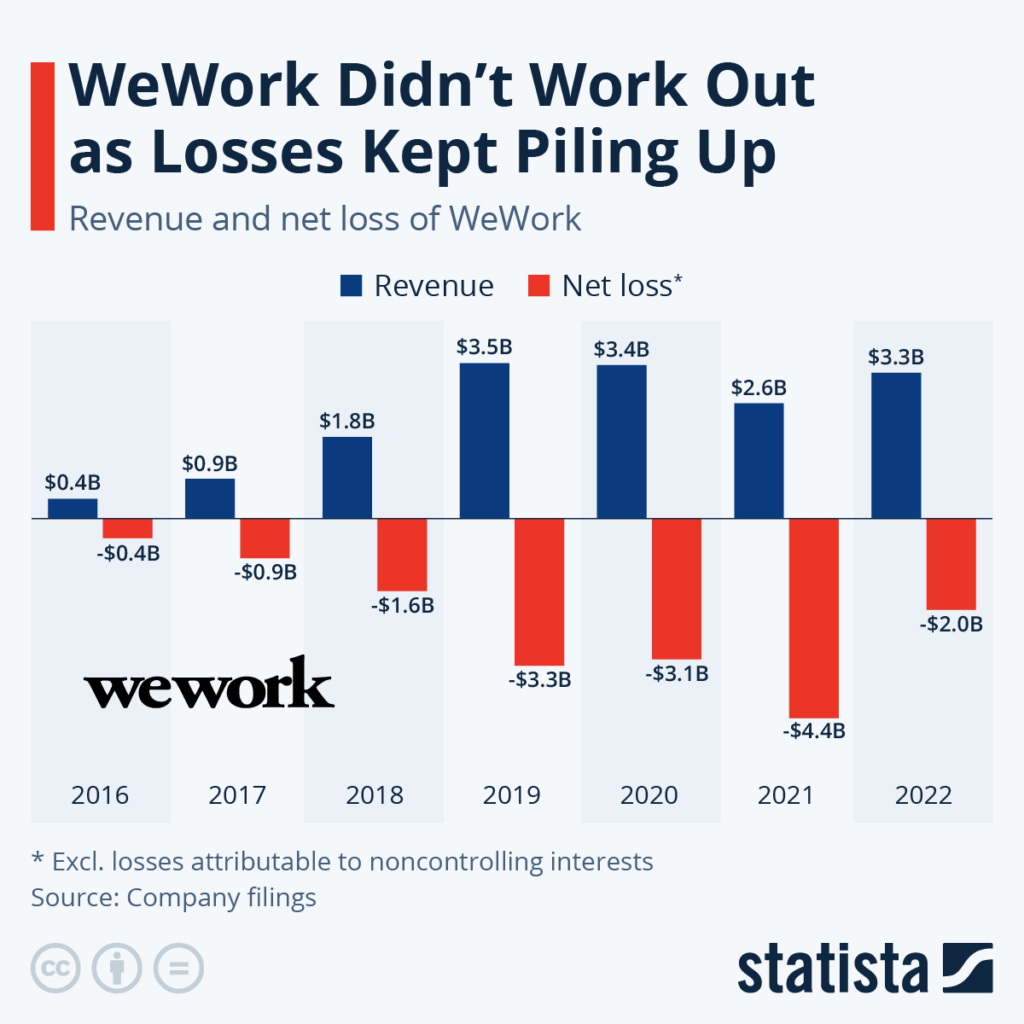
Source: WeWork Didn’t Work Out as Losses Kept Piling Up | Statista
The VC Due Diligence Process: Stages
The venture capital due diligence process typically moves through four stages. Each stage narrows the funnel and deepens the analysis.
- Initial screening. Assess fit with the fund thesis, market size, and team quality. Most opportunities exit the funnel here, usually within days.
- Preliminary due diligence. A promising screen triggers a deeper analysis of the deck, financial summary, and market. The deal team prepares a qualification memo for partner discussion.
- Full due diligence. The structured checklist is applied in earnest. The team gets data room access, runs customer and reference calls, and brings in legal review. This stage produces the evidence base for the investment memo.
- Confirmatory diligence and closing review. After the term sheet is signed, last-mile verification confirms legal documentation, reps and warranties, and any conditions to close.
It’s important to note that timelines vary by stage and competition. Seed diligence can run one to two weeks, while Series A and B reviews commonly take three to eight weeks. In competitive rounds, a firm’s ability to compress the process without cutting corners becomes a genuine edge.
Documentation should accumulate throughout. Notes from screening feed the qualification memo, and full-diligence findings feed the investment memo. As a result, the final decision rests on a written evidence trail rather than partner recollection.
Managing VC Due Diligence with a Virtual Data Room
Fundraising means sharing sensitive startup materials, such as financial statements, cap tables, IP documents, customer contracts, and board records, with multiple investors at once. Email and generic cloud folders are not built for that level of control. They make it harder to manage investor-specific access, track engagement, and keep Q&A organized.
A purpose-built data room for investors helps founders run VC due diligence with more structure and less friction. Key features include:
- Granular permissions control which investors can view, download, or print specific folders and documents.
- Audit trails track who opened each file, when they viewed it, and how often they returned.
- Document engagement analytics identify which investors are spending time on key materials.
- Q&A workflows keep investor questions, answers, owners, and follow-ups in one auditable workspace.
- Version control ensures investors always see the latest financial model, pitch deck, or legal document.
- Structured indexing organizes materials by diligence area, such as market, team, financials, legal, product, and HR.
- Secure document sharing protects confidential materials such as IP records, customer contracts, and investor updates.
For VC transactions, Ideals VDR can support both founders and investors with structured access, Q&A workflows, and document engagement tracking. Founders benefit from a clean data room setup, granular access controls that share specific materials with specific investors without exposing the full room, and a built-in Q&A module that routes questions through an auditable workflow.
For VC deal teams running investor due diligence across concurrent investments, Ideals provides the security, structure, and analytics, including document engagement tracking. That makes the process faster and more defensible. Its setup tools can help early-stage startups prepare a professional data room quickly, provided core documents are already available.
The practical move is to build the data room before the raise begins. Mirror the checklist categories above, keep documents current, and assign one owner for investor questions. That way, diligence can start as soon as investor interest becomes serious.
Common Red Flags in VC Due Diligence
Certain findings should trigger deeper scrutiny, revised terms, or a pass. Watch for the following signals.
- Unclear or unassigned IP ownership, especially work created before incorporation or by contractors without assignment agreements.
- Messy or inaccurate cap tables, including undisclosed SAFEs or convertible notes.
- Inconsistent financial records or revenue spikes that the company cannot explain.
- Heavy reliance on a single customer, creating concentration risk.
- Founder-team conflicts or unexplained co-founder departures.
- Market sizing is built on implausibly broad TAM definitions.
- Outstanding litigation or regulatory issues that surface late in the process.
A red flag is rarely an automatic pass. Instead, it is a prompt to dig deeper, reprice, or restructure before committing capital.
Best practices for investors conducting due diligence
The following effective practices help investors protect their capital, strengthen partnerships with founders, and increase the likelihood of long-term success.
1. Ensure accurate and complete financial and legal reviews
One of the biggest risks in venture capital investment is discovering financial inconsistencies or legal complications after this investment is made. For example, early-stage companies may present optimistic revenue projections, understate liabilities, or lack proper legal protections for their intellectual property.
To avoid this, investors must insist on audited financial statements, validate revenue streams, and carefully examine contracts, debt obligations, and regulatory compliance. As mentioned, engaging legal and financial experts early in the process helps identify hidden risks and ensures the target complies with regulations, maintains financial transparency, and meets industry standards.
Another way to mitigate these risks is to conduct thorough scenario analysis and stress testing the startup’s financial and legal assumptions. That involves evaluating the business’s performance under different market conditions, assessing potential regulatory changes, and identifying contractual obligations that could impact future growth.
2. Maintain transparency with startup founders
A common challenge in VC deals is misalignment between investors and founders, leading to conflicts over growth strategies, valuations, and operational control. When expectations are unclear, disagreements can slow down execution and even result in a failed investment.
To foster a strong partnership, investors should establish open communication from the start, setting clear terms for funding, decision-making authority, and business objectives. Regular check-ins, structured reporting, and mutual goal-setting reduce friction and improve long-term success.
In addition, drafting detailed term sheets and investment agreements can prevent misunderstandings by clearly outlining rights, responsibilities, and expectations.
3. Identify and mitigate risks before investment
Many investors focus on a startup’s potential without thoroughly assessing the challenges that could derail its growth. In particular, they fail to recognize scalability issues, customer churn, or shifting regulatory environments.
So, investors should remember that thorough due diligence involves conducting scenario analyses, stress-testing financial models, and evaluating industry-specific risks. They should also assess the startup’s adaptability to market changes and have contingency plans to address potential obstacles before they become deal-breakers.
Besides, engaging with industry experts and conducting reference checks on key team members can provide deeper insights into the startup’s credibility, leadership capabilities, and ability to execute its business strategy. It ensures more informed and strategic decisions for portfolio companies.
The more careful and thorough investors are, the earlier they spot risks and increase their chances of strong returns. Next, we invite you to explore the best data room platforms to streamline and secure the due diligence process.
Best VDR providers for venture capital operations
We selected the most advanced providers for VC due diligence based on functionality, security, and user reviews. Check them out below and compare.
1. Ideals
Ideals is a user-friendly platform that protects data, streamlines collaboration, and ensures transparency throughout the venture capital due diligence process. With its mobile and desktop apps and multilingual interface, the software enables smooth document sharing and access management. Thus, it is ideal for global teams working across different time zones.
Additionally, Ideals meets the highest security standards and offers comprehensive protections for processes, applications, infrastructure, and personnel. So, investors can trust the platform with sensitive data, providing peace of mind throughout the due diligence journey.
2. Securedocs
Securedocs offers unlimited users and storage, making it a strong option for due diligence processes. However, a notable drawback is its limited administrative roles. Each plan only includes five admin roles, with an additional cost for every extra five. This structure may not be ideal for larger or more complex transactions.
3. DFIN
Donnelley virtual data room, a subsidiary of Donnelley Financial Solutions, offers advanced security and document management features for complex corporate transactions. However, its higher cost compared to other VDR providers may deter smaller firms or those managing less complex deals.
Now, you can compare these top providers and choose the best option:
| Features important for VC due diligence | Ideals | Securedocs | DFIN |
| Granular data access control | 8 levels | 5 levels | 4 levels |
| Detailed audit trail | ✅ | ✅ | ✅ |
| IP address-based access restriction | ✅ | ✖️ | ✖️ |
| Compliance | GDPR HIPAA FedRAMP EU/US Privacy Shield EU-US DPF | GDPR HIPAA EU-US DPF | GDPR HIPAA FedRAMP EU/US Privacy Shield EU-US DPF |
| Automatic data indexing | ✅ | ✅ | ✅ |
| Screenshot prevention | ✅ | ✖️ | ✖️ |
| Multi-format support | ✅ | ✅ | ✖️ |
| Full-text search with OCR | ✅ | ✖️ | ✅ |
| Advanced Q&A | ✅ | ✅ | ✖️ |
| 24/7 in-app support | ✅ | ✖️ | ✖️ |
| Free trial | Yes | Yes | ✖️ |
| Rating (according to Capterra) | 4.8(308 reviews) | 4.9(161 reviews) | 5.0(2 reviews) |
Learn more about these providers to choose the best tool.
Conclusion
A rigorous VC due diligence checklist is what separates informed, value-creating investments from costly write-downs. The framework covers eight areas: market, team, product, financials, legal, go-to-market, operations, and risk. Applied consistently across every deal, it removes blind spots and makes investment decisions comparable across partners and time.
The final fundamental is infrastructure. A secure, well-organized data room keeps sensitive materials protected and the process moving for both investors and founders. Ideals VDR makes managing VC due diligence secure and efficient from the first document request to the wire.
FAQ
What is VC due diligence?
VC due diligence is the systematic, multi-stage review that a venture capital firm performs before making a venture capital investment. It evaluates the startup’s market, management team, product, financials, legal compliance, and operations to validate the investment thesis and identify potential risks before capital is committed.
What does a VC due diligence checklist include?
A complete VC due diligence checklist covers market and competition, founding team, product and technology, financials, legal and governance, sales and go-to-market, operations and HR, and risk and insurance. A practical diligence checklist template should include checks for intellectual property, cap table accuracy, financial projections, customer traction, stock option plans, and key contractual obligations.
How long does VC due diligence take?
Timelines depend on stage, deal urgency, and market conditions. Seed-stage diligence may take one to two weeks, Series A reviews often run three to six weeks, and later rounds can take four to eight weeks. Founders with a clear business plan, an organized data room, and clean financial records can often shorten the venture capital investment process.
What do VCs look for in due diligence?
Venture capitalists look for a large target market, strong competitive positioning, credible founders, evidence of product-market fit, and healthy unit economics. They also analyze key metrics such as revenue growth, retention, burn rate, runway, and customer acquisition cost. Because early-stage data is limited, the review weighs founder quality and market opportunity alongside historical performance.
What are the biggest red flags in VC due diligence?
The biggest red flags include unclear intellectual property ownership, messy cap tables, weak financial health, heavy customer concentration, founder disputes, inflated market-size claims, and undisclosed litigation. Investors also look closely at regulatory risk, weak revenue streams, unrealistic revenue projections, and gaps in risk management.
How does a data room help VC due diligence?
A virtual data room keeps sensitive startup materials secure and organized during fundraising. It gives investors structured access to financial records, legal documents, partnership agreements, product materials, and HR files while protecting confidential information such as proprietary technology and trade secrets. Platforms like Ideals help founders create a professional data room quickly and manage investor questions in one place
Related posts

14 September 2026
What Is a Due Diligence Report? Structure, Types & How to Write One
A due diligence report converts weeks of document review into a single decision-ready judgment: proceed, renegotiate, or walk away. Without...

26 August 2026
What Is Commercial Due Diligence? Process, Checklist, and Report Guide
Most M&A deals don’t go the way buyers expect. Research analyzing over 40,000 acquisitions over 40 years found that 70–75%...
06 August 2026
VC Due Diligence Checklist: A Complete Guide for Venture Capital Investors
Venture capital (VC) is a game of asymmetric outcomes. Global VC funding reached $425 billion in 2025, according to Crunchbase....